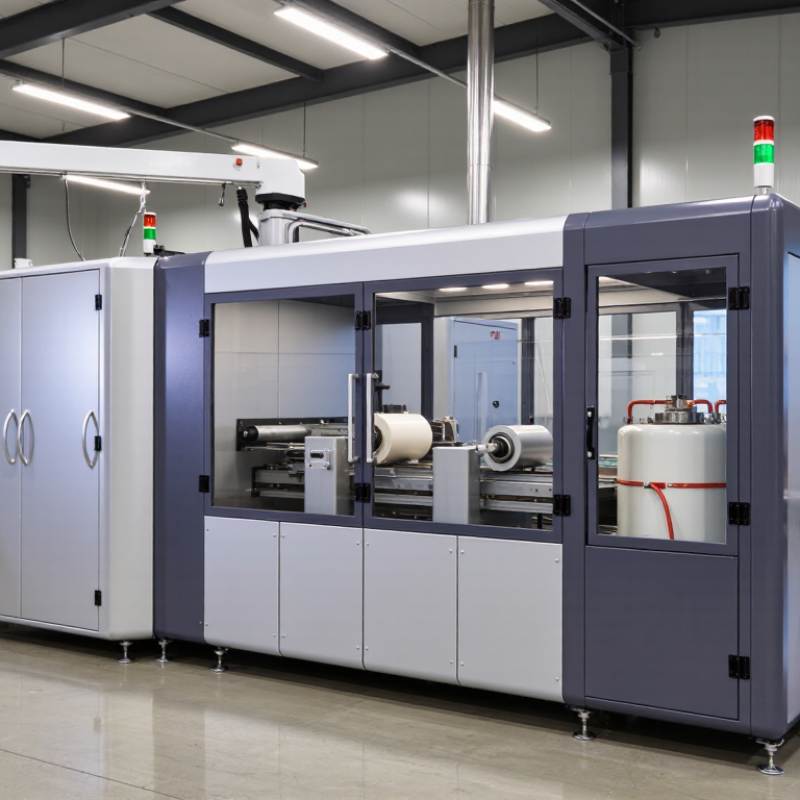
| Machine Basics | Coating technology | Slot-die Roll coating Spray coating Contact coating | Continuous coating of films, foils, papers, nonwovens, textiles, labels, tapes, and laminates. | Match the coating head to the required coat-weight accuracy, substrate surface, and operating speed. |
| Machine Basics | Typical coating width | Approximately 300–2,000 mm for many converting lines; custom widths may be smaller or larger. | Narrow-web label and tape production through wide-web film, paper, and nonwoven processing. | Specify usable coating width, web width, edge trim, and future width requirements separately. |
| Machine Basics | Line-speed range | Approximately 10–300 m/min for many hot melt coating applications; the usable range varies by adhesive and substrate. | Low-speed specialty coating, medium-speed converting, and high-speed adhesive coating. | Verify speed at the target coat weight, not only the machine's maximum mechanical speed. |
| Coating System | Slot-die system | Pre-metered coating with a controlled die gap and pump-fed adhesive delivery. | Uniform full-width coating, pressure-sensitive adhesive, hygiene materials, medical products, and laminating webs. | Check die-lip design, shim or gap adjustment, pump stability, and cleaning access. |
| Coating System | Roll coating system | Metered coating using one or more heated rolls; suitable for contact transfer and selected gravure-style processes. | Tapes, release liners, textiles, papers, and applications requiring robust web contact. | Evaluate roll surface finish, runout, nip control, pressure adjustment, and adhesive release behavior. |
| Coating System | Spray coating system | Atomized or filament-style hot melt application for patterned, intermittent, or breathable coating. | Nonwovens, hygiene products, construction materials, filters, and moisture-permeable laminates. | Confirm pattern resolution, nozzle maintenance, overspray control, and ventilation requirements. |
| Coating System | Adhesive melting and delivery | Melt tank or heated hopper, heated hose, heated pump, and heated coating head. | Maintains adhesive in a molten state from loading through application. | Check independent temperature zones, insulation, melt-level sensing, filtration, and hose flexibility. |
| Coating System | Temperature control | Common operating temperatures are approximately 120–190°C, depending on adhesive chemistry and supplier guidance. | Stable viscosity and consistent flow during melting, pumping, and coating. | Use multi-zone control, calibrated sensors, over-temperature protection, and recipe management. |
| Materials | EVA hot melt adhesive | Ethylene-vinyl acetate based; commonly selected for general-purpose bonding and packaging applications. | Paper, board, selected films, packaging components, and general assembly. | Confirm compatibility with the substrate, required open time, bond strength, and thermal resistance. |
| Materials | SBC hot melt adhesive | Styrene block copolymer based; available in formulations for pressure-sensitive and elastic bonding. | Labels, tapes, elastic attachments, hygiene products, and flexible laminates. | Check viscosity stability, tack, shear resistance, elasticity, and sensitivity to heat or oxidation. |
| Materials | Polyolefin hot melt adhesive | Polyolefin-based formulations with low odor and good moisture resistance in suitable grades. | Packaging, nonwoven laminating, film bonding, and applications requiring clean processing. | Verify adhesion to low-surface-energy films and the required processing temperature. |
| Materials | Polyamide hot melt adhesive | Higher-performance hot melt chemistry with comparatively strong heat and chemical resistance. | Technical textiles, electrical components, automotive-related parts, and demanding industrial bonding. | Confirm melt temperature, moisture sensitivity, substrate compatibility, and equipment heat capacity. |
| Materials | Reactive polyurethane hot melt | Moisture-reactive hot melt that develops additional strength after exposure to atmospheric moisture. | Durable laminating and assembly applications requiring high final bond performance. | Require sealed material handling, moisture control, suitable hose and head design, and correct purging procedures. |
| Coat Weight | 5–15 g/m² | Light coat-weight range. | Light laminating, breathable constructions, selected labels, and low-add-on adhesive layers. | Prioritize precise metering, low-flow stability, clean die lips, and accurate web tension control. |
| Coat Weight | 15–40 g/m² | Low-to-medium coat-weight range. | Pressure-sensitive tapes, labels, flexible laminates, and many nonwoven bonding processes. | Compare pump turndown, cross-web uniformity, coating-head adjustment, and line-speed capability. |
| Coat Weight | 40–80 g/m² | Medium coat-weight range. | Stronger laminating bonds, technical textiles, protective materials, and heavier adhesive layers. | Check melt capacity, heated-zone recovery, filtration, and substrate cooling or support requirements. |
| Coat Weight | 80–150 g/m² | High coat-weight range. | Heavy-duty laminates, construction products, thick nonwovens, and high-add-on coating applications. | Confirm pump capacity, thermal power, die-flow distribution, web support, and safe operator access. |
| Metering | Coat-weight control | Calculated from adhesive mass flow and coated area; commonly monitored by pump output, line speed, and coating width. | Maintains target adhesive consumption and helps control bond performance. | Request gravimetric or laboratory verification procedures and cross-web uniformity data. |
| Web Handling | Tension control | Closed-loop tension control using load cells, dancer systems, or drive synchronization. | Reduces wrinkles, stretching, lateral movement, and coating defects on flexible substrates. | Check tension range, sensor placement, automatic splicing compatibility, and substrate-specific recipes. |
| Quality | Typical process checks | Coat weight, cross-web uniformity, bond strength, peel, tack, visual defects, and web alignment. | Confirms that the coating meets functional and appearance requirements. | Ensure the machine can integrate inspection, sampling, data logging, and alarm functions. |
| Safety | Operator protection | Guarding, emergency stops, thermal cut-outs, pressure relief, insulation, and hot-surface warnings. | Protects operators from heated adhesive, moving rolls, pressurized lines, and electrical hazards. | Review risk assessment, guarding access, lockout procedures, exhaust provisions, and training requirements. |
| Maintenance | Cleaning and changeover | Purge cycles, removable filters, accessible die or nozzles, heated flushing, and controlled adhesive drain paths. | Reduces downtime and helps prevent carbonized adhesive, blocked nozzles, and cross-contamination. | Ask for estimated cleaning time, spare-part requirements, approved purge materials, and maintenance access. |
| Energy | Heating and operating efficiency | Energy demand depends on melt throughput, temperature setpoints, line speed, insulation, ambient conditions, and startup frequency. | Affects operating cost and adhesive thermal history. | Compare insulated zones, standby modes, startup time, heat recovery, and actual energy data at the target process. |
| Purchase Planning | Recommended specification package | Substrate details, adhesive type, coat-weight range, coating width, line speed, temperature, roll diameter, and quality targets. | Creates a clear technical basis for machine selection and acceptance testing. | Require a documented process trial using the intended adhesive and production substrate before final approval. |