
Choosing among China’s HVAC sensors suppliers takes more than comparing prices or product catalogs. The International Energy Agency’s 2023 Global Status Report for Buildings and Construction estimates that buildings use about 30% of global final energy and produce 26% of energy-related emissions. Better measurement can support smarter control, but sensors alone do not guarantee efficient operation.
Healthy-buildings expert Dr. Joseph G. Allen has said, “The air we breathe is the most important thing we consume.” For HVAC buyers, that makes dependable temperature, humidity, pressure, and indoor-air-quality readings consequential. Small details matter: response time, calibration records, stable readings, and clear communication protocols. A sensor that drifts quietly can undermine a carefully tuned ventilation system.
This guide examines suppliers through practical evidence: product range, manufacturing and testing capabilities, documentation, customization, and after-sales support. It also considers whether specifications are clear enough for engineers to verify, rather than merely attractive in a brochure. Ask for sample test data. Check how the supplier handles calibration and sensor replacement. Those conversations can reveal more than a polished product page.
There are trade-offs. A low purchase price may not include the integration support a project needs, while a long catalog does not prove consistent quality. This overview is a starting point, not a factory audit. Treat supplier claims as claims, and confirm critical performance details before selecting a partner.

HVAC sensors turn changing room conditions into signals that building controls can use. Common devices measure temperature, relative humidity, carbon dioxide, pressure, airflow, or occupancy. A thermostat sensor may sit in a wall, while a duct sensor samples air moving through the system. Their readings help adjust heating, cooling, ventilation, and alarms. Sensors are not magic. A badly placed unit can make a control system confidently wrong.
The scale of the issue is substantial. The International Energy Agency’s 2023 Global Status Report for Buildings and Construction estimates that building operations used 30% of global final energy in 2022 and produced 26% of energy-related emissions. That figure covers building operations, not HVAC alone. Still, reliable measurements can help operators spot unnecessary heating or cooling and respond to changing occupancy. A rising carbon dioxide reading, for example, may prompt a ventilation adjustment, though it does not directly measure every indoor pollutant.
For building teams comparing sensor suppliers in China, practical details matter as much as a product sheet. Check stated accuracy, response time, operating range, calibration method, and communication compatibility. Ask how readings are tested under real duct or room conditions. Placement matters, too: sunlight, supply-air drafts, and nearby equipment can distort measurements. I would not treat one low-cost reading as proof of system performance; commissioning and periodic checks are easy to underestimate.
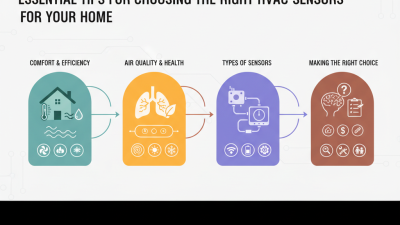
When comparing HVAC sensor suppliers in China, look beyond unit price. Request datasheets showing measurement range, accuracy, repeatability, response time, and humidity limits. Check whether specifications apply across the full operating range or only at room temperature. Ask for calibration records and sample test reports, not just catalog figures. Useful evidence. Confirm that quality checks and calibration methods are documented and repeatable. Test samples in your own system, especially near ducts, coils, or areas with vibration. A sensor that performs well on a bench may behave differently after installation.
Assess communication and production capability alongside technical performance. Ask how the supplier controls consistency between production lots, handles design changes, and reports material substitutions. Confirm the output signal, wiring, connector type, and protocol match your controller before placing a large order. Request realistic lead times and clarify how faulty units are investigated and replaced. Engineering support matters when readings drift or installation conditions change. No supplier is flawless. I would also question vague claims such as “high precision” without a stated tolerance or test method. A simple comparison sheet can reveal gaps, though it cannot replace testing samples under real operating conditions.
Chinese HVAC manufacturers commonly offer sensors for temperature, humidity, pressure, airflow, and indoor air quality. Temperature probes measure supply-air ducts, return vents, or chilled-water lines. Humidity sensors help control comfort and reduce condensation risk. For practical comparison, ask about measurement range, stated accuracy, and calibration records—not just the product’s headline specifications.
Differential-pressure sensors monitor filters and room pressure. A rising reading across a filter can indicate it needs inspection. Airflow sensors help verify ventilation, while carbon dioxide sensors can support demand-controlled ventilation in occupied rooms. Some product lines also include occupancy or refrigerant-leak sensors. These are not interchangeable; placement and system design matter. Small details count.
For building controls, check whether outputs match the existing system, such as 0–10 V, 4–20 mA, or a supported digital protocol. Request details on response time, operating temperature, enclosure protection, and long-term drift. A sensor may test well in a clean laboratory yet behave differently in a dusty duct or humid plant room. That matters. I would also ask for sample units and test them against a trusted reference before a large order. Documentation can be incomplete, so confirm wiring, installation limits, and calibration procedures in writing.
Choosing an HVAC sensor supplier in China requires more than comparing unit prices. Check measurement range, accuracy, repeatability, and performance across the temperatures and humidity your system will face. Ask for calibration records and test reports tied to the exact model, not a similar product. ISO 9001 can indicate a quality-management system, while ISO/IEC 17025 concerns laboratory competence; neither replaces product-level verification. Request samples and compare their readings with a calibrated reference. Small offsets matter.
Support is part of the product. Ask whether engineers can help with wiring, communication protocols, firmware updates, and failure analysis. Confirm response times, spare-part availability, and whether documentation is clear enough for your technicians to use on site. The International Energy Agency reported that buildings used about 30% of global final energy in 2022 and produced 26% of energy-related emissions. Better sensing can support tighter control, but poor installation or calibration can erase those gains. Supplier claims deserve checking.
Who Are the Best HVAC Sensor Suppliers in China?
How to Verify and Select a Suitable HVAC Sensor Supplier
Choosing a Chinese HVAC sensor supplier takes more than comparing unit prices. Define the sensing range, output signal, accuracy, and installation conditions your system needs. Ask for a current datasheet and check that it matches the quoted model. For a duct-mounted temperature sensor, confirm probe length, cable type, and response time. Small details matter. Request calibration records and ask how measurement results are traceable. A certificate alone does not prove that every delivered unit performs as expected.
Tips: Order samples before committing to a large quantity. Test them with your controller under realistic airflow and temperature conditions. Compare readings with a trusted reference instrument, and record any variation. Ask about production lead times, batch checks, packaging, and how the supplier handles faulty units. Clear, specific answers are more useful than broad promises.
For a closer review, request a factory or quality-process overview, plus inspection records from a recent batch. Check whether the supplier can explain sensor drift, operating limits, and installation errors in plain terms. If communication is slow during sampling, production updates may be difficult too. Still, one missed email is not proof of poor quality; verify patterns, not impressions. Keep the evaluation notes, because memory tends to favor the smoothest sales call.
A practical supplier-evaluation framework based on key product and procurement checks.
Scores are suggested priorities on a 1–5 scale, not market-survey results or ratings of specific suppliers. Confirm each item against your application, applicable standards, and documented test evidence.
As a specialist in environmental and flow sensor technology, ScioSense enables companies to use the planet’s resources more sustainably, helping to create a healthier future for all.