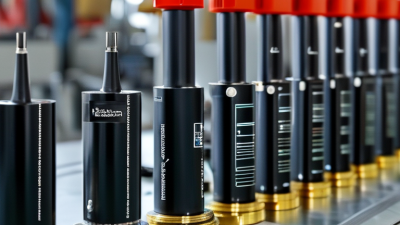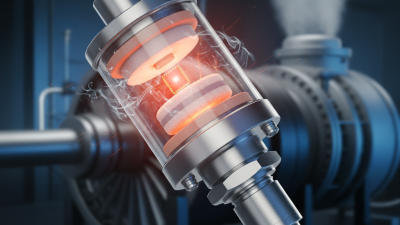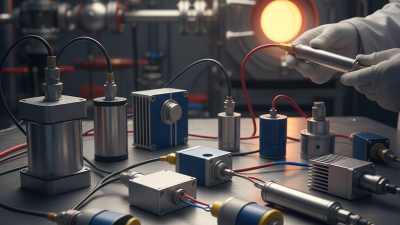


Choosing the right low flow sensors requires more than comparing catalog specifications. At tiny flow rates, a difference of a few milliliters per minute can change a dosing result, weaken a laboratory test, or trigger an unnecessary alarm. Tube diameter, fluid viscosity, pressure fluctuation, temperature, and installation position all influence the final reading.
Flow-measurement engineer Richard W. Miller is widely associated with the practical view that “flow measurement is a system problem, not simply a meter problem.” That principle guides this comparison. The best sensor must match the fluid, operating range, response time, and maintenance conditions. A sensor that performs well with clean water may struggle with oil, solvents, bubbles, or particle-filled liquids.
Small details matter.
This guide examines 10 best low flow sensors for accurate flow measurement across laboratory equipment, medical devices, chemical dosing, fuel systems, and precision manufacturing. Each option is considered through measurable criteria, including accuracy, repeatability, turndown ratio, pressure loss, signal output, and calibration requirements. Real-world usability also matters. Can technicians clean it without damaging the sensing element? Does it remain stable during pump pulsation? Will its output integrate easily with existing controls?
Some ratings may still require reflection. Manufacturer data often comes from controlled conditions, not a vibrating production line. No sensor wins every application. The most reliable selection begins with verified operating data, careful installation, and realistic expectations.
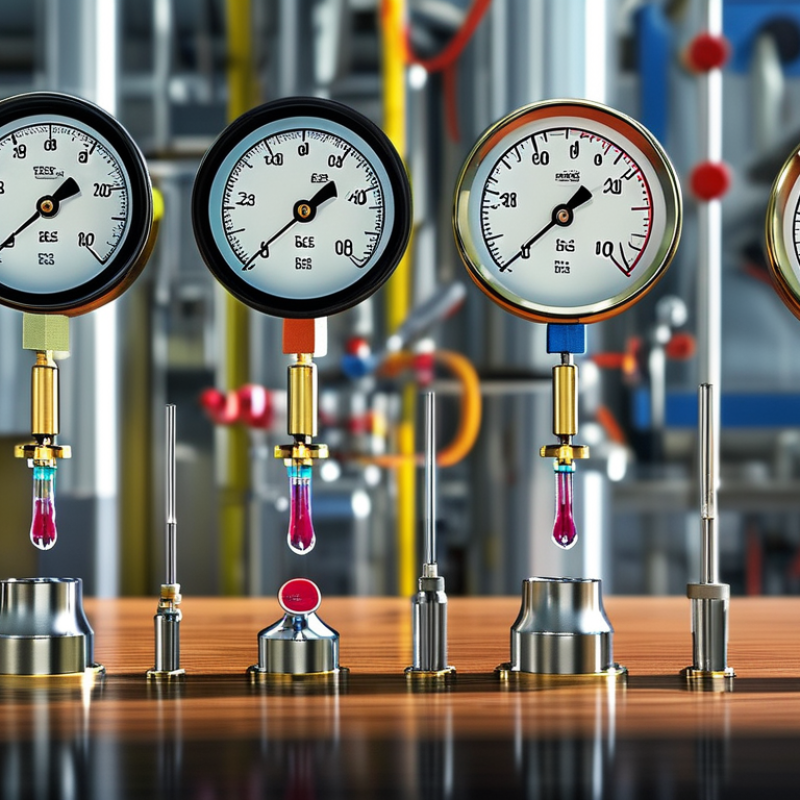
Low-flow sensors measure very small amounts of liquid or gas moving through a system. They are useful when ordinary meters respond slowly or miss intermittent movement. A sensor may detect flow through thermal, pressure, ultrasonic, or mechanical principles. Each method reacts differently to viscosity, temperature, bubbles, and pipe size.
Thermal sensors warm a tiny element and measure how quickly moving fluid carries heat away. Faster heat loss usually indicates greater flow. Differential-pressure sensors compare pressure before and after a narrow passage. The pressure difference changes as flow increases. Mechanical designs may use a small piston or turbine, while ultrasonic models measure changes in sound travel time.
The installation details matter more than many buyers expect. A short, straight pipe section can improve stability. Dust, trapped air, pulsation, and sudden temperature changes can still distort readings. I have found that checking the sensor against a known volume is often more useful than trusting a factory number. No sensor is perfect. Even a sensitive device can produce unreliable data when the process conditions change. Selection should match the fluid, expected flow range, response time, pressure limit, and required accuracy. A sensor that performs well in clean water may behave poorly with thick fluid or gas containing moisture. Calibration records and routine inspection help reveal those weaknesses.
A practical comparison of low-flow sensor technologies, operating ranges, accuracy, pressure loss, and typical applications.
| Rank | Sensor Type | Measurement Principle | Typical Low-Flow Range | Typical Accuracy | Suitable Fluids | Pressure Drop | Output Options | Key Advantages | Main Limitations | Best-Fit Applications |
|---|---|---|---|---|---|---|---|---|---|---|
| 1 | Coriolis Micro-Flow Sensor |
Measures the phase shift created by fluid momentum in vibrating tubes. It can also provide direct mass-flow measurement. | Approximately 0.1 g/min to 1,000 g/min, depending on tube size and fluid properties. | Typically ±0.1% to ±0.5% of reading after calibration. | Liquids, gases, chemicals, oils, and mixtures. | Low to moderate; increases with viscosity and flow rate. | 4–20 mA, pulse, frequency, Modbus, digital communication. | High accuracy, direct mass-flow measurement, density measurement, and no moving parts. | Higher purchase cost; sensitive to two-phase flow, vibration, and installation conditions. | Precision dosing, pharmaceutical processes, chemical injection, and laboratory systems. |
| 2 | MEMS Thermal Mass-Flow Sensor |
Determines gas mass flow by measuring heat transfer from a heated microstructure to the moving gas. | Approximately 0.5 standard cubic centimeters per minute to 100 standard liters per minute. | Typically ±1% to ±3% of full scale, depending on calibration and gas composition. | Clean, dry gases such as air, nitrogen, oxygen, and argon. | Very low when installed in a properly sized flow channel. | Analog voltage, 4–20 mA, pulse, UART, I²C, SPI, or digital bus. | Excellent sensitivity at low gas flows, compact construction, and low power consumption. | Gas composition, humidity, contamination, and temperature can affect accuracy. | Gas monitoring, leak detection, medical equipment, combustion control, and laboratory instruments. |
| 3 | Laminar Differential-Pressure Sensor |
Uses a laminar-flow element to create a predictable pressure drop proportional to volumetric flow. | Approximately 1 mL/min to 100 L/min for liquids and gases, depending on element size. | Typically ±0.5% to ±2% of reading or full scale. | Clean liquids and gases; compatible with many industrial fluids. | Low to moderate and generally predictable. | Analog voltage, 4–20 mA, digital pressure output, or calculated flow signal. | Good repeatability, broad operating range, and simple flow calculation. | Requires pressure measurement and compensation for temperature, viscosity, and density changes. | Air sampling, instrument panels, medical gas equipment, and process-control skids. |
| 4 | Capillary Thermal-Flow Sensor |
Measures heat carried through a small capillary tube by the flowing fluid. | Approximately 0.01 mL/min to 100 mL/min for liquids or low gas flows. | Typically ±1% to ±3% of reading after fluid-specific calibration. | Clean, single-phase liquids and gases. | Low to moderate; depends on capillary diameter and viscosity. | Analog voltage, 4–20 mA, pulse, or digital communication. | Very sensitive at low flow rates and suitable for compact instrumentation. | Requires stable fluid properties and can be affected by particles, bubbles, and temperature changes. | Microfluidics, reagent dosing, analytical instruments, and small-volume chemical delivery. |
| 5 | Positive-Displacement Micro-Flow Meter |
Traps and counts known fluid volumes using gears, pistons, oval rotors, or other moving elements. | Approximately 0.01 mL/min to 1,000 mL/min. | Typically ±0.5% to ±1% of reading when operated within the calibrated range. | Clean liquids, oils, fuels, lubricants, and viscous fluids. | Moderate to high, especially with high-viscosity fluids. | Pulse, frequency, 4–20 mA, or digital communication. | Strong low-flow sensitivity, good repeatability, and direct volumetric measurement. | Moving parts can wear; particles, pulsation, and excessive viscosity may affect performance. | Lubricant dosing, fuel measurement, ink delivery, and precision liquid dispensing. |
| 6 | Optical Drop or Particle-Detection Sensor |
Detects droplets, bubbles, or fluid movement through an optical path and calculates flow from event frequency or volume. | Approximately 0.01 mL/min to 100 mL/min, depending on channel geometry. | Typically ±1% to ±3% after calibration with the intended fluid and tubing. | Clear or translucent liquids and certain gas-liquid systems. | Very low when used with a dedicated flow channel. | Pulse, switch output, USB, serial, or digital logic signal. | Compact, highly responsive, and well suited to disposable or single-use flow paths. | Color, opacity, bubbles, ambient light, and fouling may interfere with optical detection. | Medical devices, laboratory analyzers, infusion systems, and microfluidic equipment. |
| 7 | Electromagnetic Flow Sensor |
Uses Faraday’s law to measure the voltage generated when a conductive liquid moves through a magnetic field. | Approximately 0.05 L/min to 100 L/min, depending on pipe diameter and sensor design. | Typically ±0.5% to ±1% of reading. | Conductive liquids, wastewater, water-based chemicals, slurries, and food liquids. | Very low because the measuring tube has no obstruction. | 4–20 mA, pulse, frequency, HART, Modbus, or other digital outputs. | No moving parts, low maintenance, and good performance with dirty or abrasive conductive liquids. | Does not measure non-conductive liquids, gases, or most hydrocarbons; requires a full pipe. | Water treatment, chemical processing, cooling-water monitoring, and sanitary liquid systems. |
| 8 | Turbine Flow Sensor |
Measures the rotational speed of a rotor placed in the flow path and converts it to flow rate. | Approximately 0.05 L/min to 20 L/min for small-bore designs. | Typically ±0.5% to ±2% of reading within the calibrated range. | Clean, low-viscosity liquids and gases. | Low to moderate. | Pulse, frequency, analog, or digital communication. | Cost-effective, fast response, and easy to integrate with electronic control systems. | Moving parts wear; accuracy decreases with contamination, pulsating flow, and changing viscosity. | Cooling circuits, fuel systems, water monitoring, and general-purpose process measurement. |
| 9 | Variable-Area Flow Meter |
A float moves inside a tapered tube until upward flow force balances gravity, indicating the flow rate. | Approximately 2 mL/min to 100 L/min, depending on tube size and fluid density. | Typically ±2% to ±5% of full scale. | Clean liquids and gases; materials must be compatible with the fluid. | Low to moderate. | Visual scale, reed switch, limit switch, 4–20 mA, or transmitter output. | Simple, inexpensive, requires no external power for local indication, and is easy to troubleshoot. | Lower accuracy than electronic meters; readings depend on density, viscosity, orientation, and viewing angle. | Purge panels, laboratory benches, compressed-air lines, water treatment, and utility services. |
| 10 | Ultrasonic Transit-Time Flow Sensor |
Calculates flow from the difference in ultrasonic travel time with and against the direction of flow. | Approximately 0.1 L/min to 100 L/min in small-bore, clean-liquid applications. | Typically ±1% to ±3% of reading under stable installation conditions. | Clean liquids and some gases, provided the acoustic path is suitable. | Nearly zero because there are no internal obstructions. | 4–20 mA, pulse, frequency, Modbus, or other digital interfaces. | No moving parts, minimal maintenance, and little impact on system pressure. | Very low flow, air bubbles, suspended solids, insufficient straight-run length, and poor acoustic coupling can reduce accuracy. | Water circulation, building services, process skids, and applications where pressure loss must be minimized. |
Technical note: The ranges and accuracy values shown are representative values for properly sized, calibrated instruments. Actual performance depends on fluid density, viscosity, temperature, pressure, conductivity, gas composition, installation conditions, line size, and the selected calibration range.