What Are the Top Temperature Measurement Sensors?
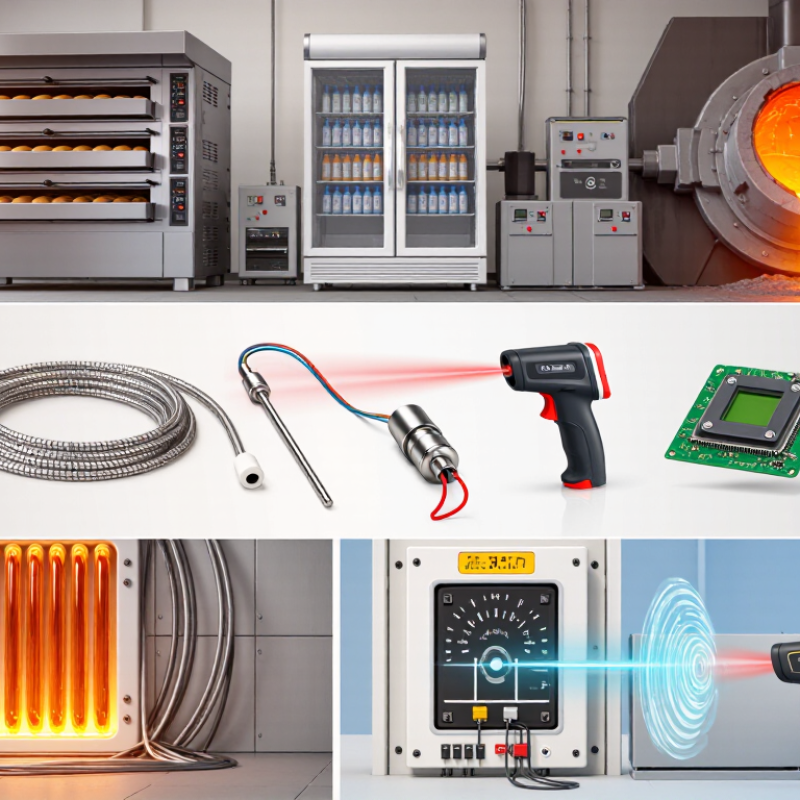
Choosing among temperature measurement sensors can feel simple until a process becomes sensitive to every degree. A bakery oven, medical refrigerator, and steel furnace need very different sensing methods. The right sensor depends on temperature range, accuracy, response time, installation space, and environmental exposure.
This guide examines common options, including thermocouples, resistance temperature detectors, thermistors, infrared sensors, and semiconductor devices. Each technology has practical strengths. Thermocouples tolerate harsh heat and vibration. RTDs provide stable, repeatable readings. Thermistors respond quickly across narrower ranges. Infrared sensors measure surfaces without physical contact. That sounds straightforward. It is not always.
Real-world performance depends on wiring, calibration, sensor placement, surface condition, and signal processing. A technically excellent device may deliver poor results when mounted near heat sources or exposed to electrical noise. I have seen temperature errors begin with a loose connection rather than a defective sensor. This detail is easy to overlook.
The comparisons ahead focus on measurable performance and practical use. They consider accuracy, durability, response speed, maintenance, and total cost. Manufacturer specifications remain important, but field conditions deserve equal attention. No single sensor wins every application. Even “high accuracy” can become misleading without a defined reference, range, and calibration method. Use these insights to question attractive specifications and select a dependable solution for the environment, not merely the datasheet.
Temperature Measurement Sensors: Definition and Operating Principles
What Are the Top Temperature Measurement Sensors?
Temperature measurement sensors convert heat into a readable electrical or optical signal. Their operating principle determines accuracy, speed, range, and installation requirements. According to Fortune Business Insights’ 2024 market report, the global temperature sensor market reached approximately USD 7.66 billion in 2023. Industrial monitoring remains a major demand area.
Resistance temperature detectors measure temperature through predictable resistance changes in metal elements. They offer strong stability and suit process control. Thermistors use semiconductor resistance changes, providing high sensitivity over narrower ranges. They respond quickly, but their output is strongly nonlinear. Thermocouples generate a voltage through the Seebeck effect between dissimilar conductors. They tolerate vibration and high temperatures. However, reference-junction compensation is essential. Infrared sensors detect emitted radiation without physical contact. Surface emissivity, dust, steam, and viewing angle can distort readings.
NIST’s ITS-90 reference framework supports temperature measurement from 0.65 K to 1,357.77 K through defined fixed points and interpolation methods. This matters during calibration. A sensor may be accurate on a test bench yet fail beside a vibrating motor. Installation errors often exceed the sensor’s stated tolerance. No sensor is perfect. Engineers should check response time, calibration history, cable resistance, shielding, and probe placement. A reflective metal surface may also mislead an infrared sensor. That detail is easy to miss. Analysis becomes more reliable when readings are compared with a traceable reference under real operating conditions.
Major Types of Temperature Sensors and Their Measurement Methods
What Are the Top Temperature Measurement Sensors?
Temperature sensors convert heat into a readable electrical signal or physical change. The best choice depends on range, accuracy, speed, and installation conditions. A sensor near a furnace may need different protection than one inside a refrigerated cabinet. Small details matter.
Thermocouples measure voltage created between two different metals. They respond quickly and tolerate high temperatures, but their signals are small. Reference-junction compensation is necessary for dependable readings. Resistance temperature detectors, or RTDs, measure resistance changes in a metal element. They provide strong stability and accuracy, especially in process monitoring. Long cables can still introduce errors.
Thermistors measure resistance changes in temperature-sensitive materials. They are highly responsive within a limited range, making them useful for batteries, medical equipment, and compact devices. Infrared sensors measure emitted radiation without touching the target. They work well for moving surfaces, hot machinery, and difficult-to-reach areas. Surface emissivity, dust, steam, and viewing distance can distort results. Clean optics help. Semiconductor sensors offer convenient digital outputs and simple integration, but their operating range is often narrower. In practical testing, sensor placement can matter as much as sensor type. Poor contact creates misleading data. Calibration should be checked against a trusted reference, although even reference instruments require periodic review.
How to Compare Sensor Accuracy, Range, Speed, and Durability
What Are the Top Temperature Measurement Sensors?
Choosing a temperature sensor starts with the measurement, not the catalog. Resistance sensors usually offer strong accuracy and stability across moderate ranges. Thermocouples tolerate high temperatures and respond quickly, though their readings depend on reference-junction compensation. Infrared sensors measure without contact. Steam, dust, and shiny metal can distort their readings.
Compare accuracy under actual operating conditions. A sensor rated at ±0.1°C may still fail when installation causes heat conduction errors. Check calibration certificates, repeatability, drift, and probe placement. Test the sensor against a traceable reference near the process setpoints. That matters more than a perfect laboratory number. Small details matter.
The measurement range should include normal operation and realistic temperature excursions. Avoid using a sensor at its limit. Speed depends on probe mass, sheath design, airflow, and mounting depth. A thick probe may survive impact but respond slowly. Durability also includes vibration, moisture, chemicals, and repeated thermal cycling. A sealed housing helps, but it cannot repair poor installation. In the field, compromises are unavoidable.
Applications of Temperature Sensors Across Different Industries
Temperature sensors support decisions in factories, hospitals, farms, buildings, and transport systems. The best choice depends on accuracy, response time, range, and installation conditions. Thermocouples suit furnaces and engines because they tolerate high temperatures and respond quickly. Resistance temperature detectors offer stable readings in laboratories, food processing lines, and pharmaceutical storage. Thermistors work well in compact devices, including medical equipment and battery systems.
In manufacturing, a misplaced sensor can create misleading process data. Sensor position matters. A probe near a cooling vent may read lower than the product itself. Engineers often compare several readings before adjusting a production line. In hospitals, temperature sensors monitor incubators, sterilization equipment, and refrigerated medicines. These applications require calibration records and clear alarm limits. Small errors can affect safety and treatment decisions.
Agricultural systems use sensors inside greenhouses, soil stations, and livestock shelters. A slow sensor may miss sudden heat stress. Infrared sensors measure surfaces without contact, making them useful for electrical inspections and moving machinery. However, dust, reflective metal, and changing distance can distort readings. Building controls use wall sensors to regulate heating and ventilation, but poor placement can cause uncomfortable rooms and wasted energy. Standards such as IEC 60751 and IEC 60584 help define measurement performance. Still, real conditions can expose weaknesses that specifications overlook. Sensor maintenance needs more attention than many projects allow.
Selecting the Right Temperature Sensor for Specific Conditions
What Are the Top Temperature Measurement Sensors?
Selecting a temperature sensor begins with the operating conditions, not the sensor catalog. A platinum RTD suits controlled processes requiring stable, repeatable readings. IEC 60751 specifies Class A tolerance as ±(0.15 + 0.002|t|) °C. That precision matters near 100°C, where small errors can alter quality decisions.
Thermocouples fit furnaces, exhaust lines, and fast-changing surfaces. They tolerate vibration and high temperatures, but their readings depend on reference-junction compensation and cable quality. Thermistors respond quickly in medical equipment and compact electronics. Their useful range is narrower, and self-heating can quietly distort measurements. Infrared sensors avoid contact, making them useful for moving webs, energized equipment, or sterile surfaces. Steam, dust, reflective metal, and changing emissivity can weaken their accuracy.
The installation can matter more than the sensor type. A probe touching a pipe wall may record the wall, not the fluid. Place it within the flow, shield it from drafts, and verify calibration against a traceable reference. The World Meteorological Organization’s State of the Global Climate 2023 reported a global mean temperature about 1.45°C above the 1850–1900 average. That figure also exposes a practical issue: measurement uncertainty must be visible when differences are small. I would not specify a sensor from range alone. Response time, pressure, corrosion, wiring distance, cleaning cycles, and calibration access deserve equal attention. Sometimes, the “best” sensor fails because installation was treated as an afterthought.